
“Franklin Grove’s Early History”
The following essay is a historical story of Franklin Grove, Illinois. It contains information on the first eighty to one hundred years. It is as factual as possible. As with any research there are things that could be debated, many times because the source of the research was incorrect. We have tried to site as many of the sources as possible. Some of the information comes from oral tradition. We have put as many relevant pictures in as possible. Please feel free to contact the village if you think something should be changed, we are willing to work with you. Our plan is to keep this historical page fresh with new information and pictures. Have fun reading it and enjoy; Scott Spangler, Franklin Grove Area Historical Society.
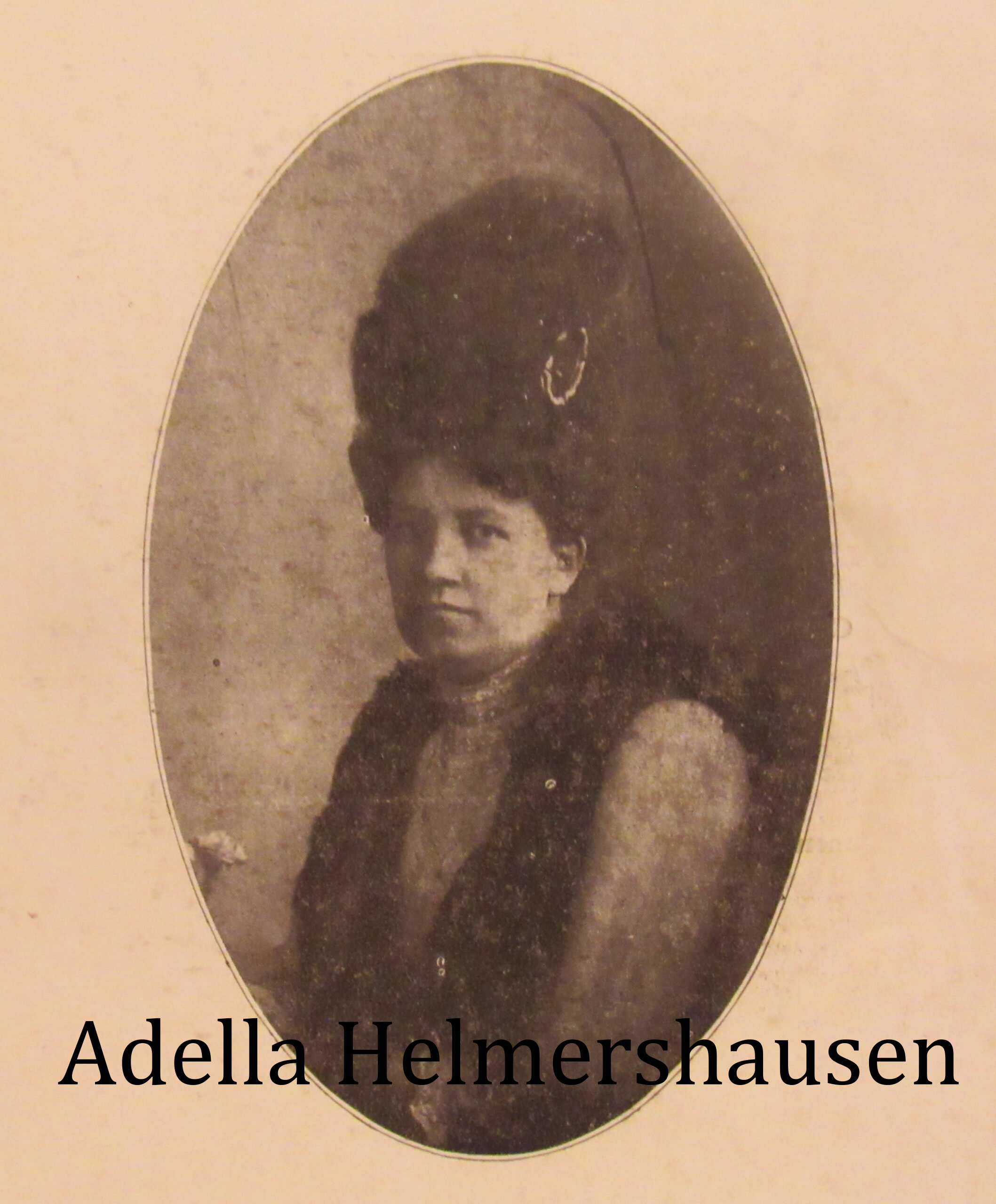
Much of the story comes from a 100th anniversary book written by Adella Helmershausen, a Franklin Grove resident. Ms. Helmershausen was a well traveled and highly educated lady. She was a prolific writer of essays, songs and genealogy. At the time of Franklin Grove’s 100th celebration she was considered to have the most knowledge of Franklin Grove. She actually knew and interviewed many of the pioneers and their immediate family members from Franklin Grove. The book I am using has a maroon paper cover and is ribbon bound. It has no page numbers or index. It measures about 8×10 inches and is about one half inch thick. The book is very fragile and I assume it was published in 1935. I cannot find a publisher, printer or date in the book. The cover script is written in gold print as follows:
SOUVENIR OF
Centennial
1835-1935
FRANKLIN GROVE * LEE COUNTY, ILLINOIS.
Interesting Tidbits
- Illinois; meaning “superior men”, came from the Illini Indians.
- Fredrick R. Dutcher named Lee County, which broke off from Ogle County.
- George Russell Linn named China Township later changed to Franklin Township through encouragement of the Franklin Grove Area Historical Society.
- John Dixon, “Father Dixon” of Dixon Illinois, named Franklin Grove.
- Colonel Nathan Whitney was the village of Chaplin’s Commissioner when the Lee County seat was created, May 31, 1839. Chaplin’s name was later changed to Franklin Grove.
- Thomas D. Robertson and Christian Lahman laid out Franklin Grove, [NE¼ Sec. 1 twp.21, Range 10], May, 8 1854.
- Louis M. Blaisdell, was the first President of the Village Board of Franklin Grove, May11, 1857.
- James Mckean was the first “saddle-bag” circuit preacher.
- George Dallas Black and George Washington Ling were the last two surviving Civil War Veterans in Franklin Grove in the year 1935 (Helmershausen (1935) “Souvenir of the Centennial”).
The first place settled in Franklin Grove was by the iron spring west of Franklin Grove. It is a beautiful spot in the famous Blackhawk country along the Rock River. There was plenty of fuel near for cutting. The groves furnished berries and nuts in abundance. Excellent fish can be easily obtained. Venison, wild turkey, and quail, were once abundant along the waters of the spring. The Indians highly prized the spring for medicinal purposes that flowed by the site of the first cabin door. The wooded slopes made a deep wind break from the west and north winds.
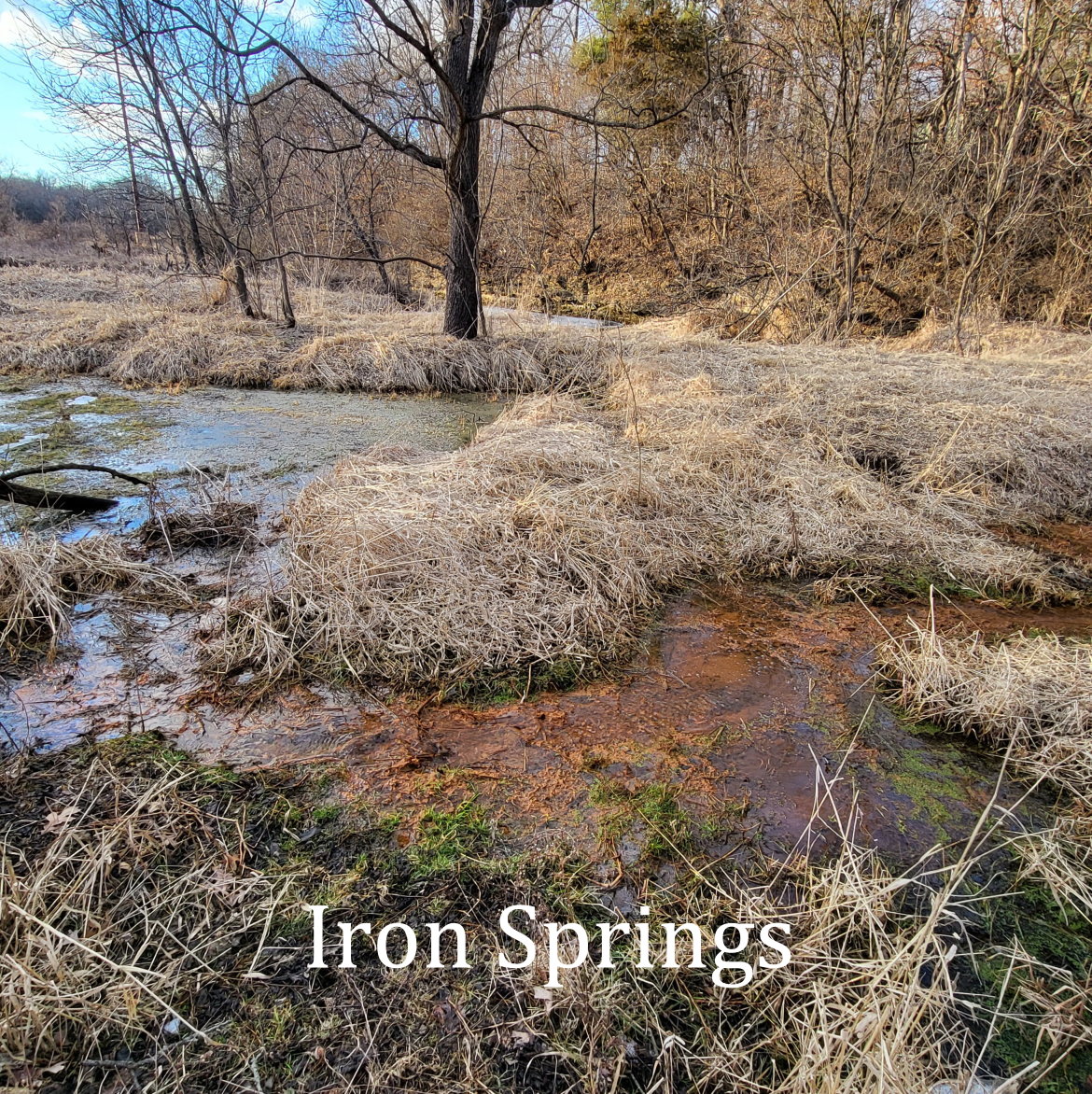
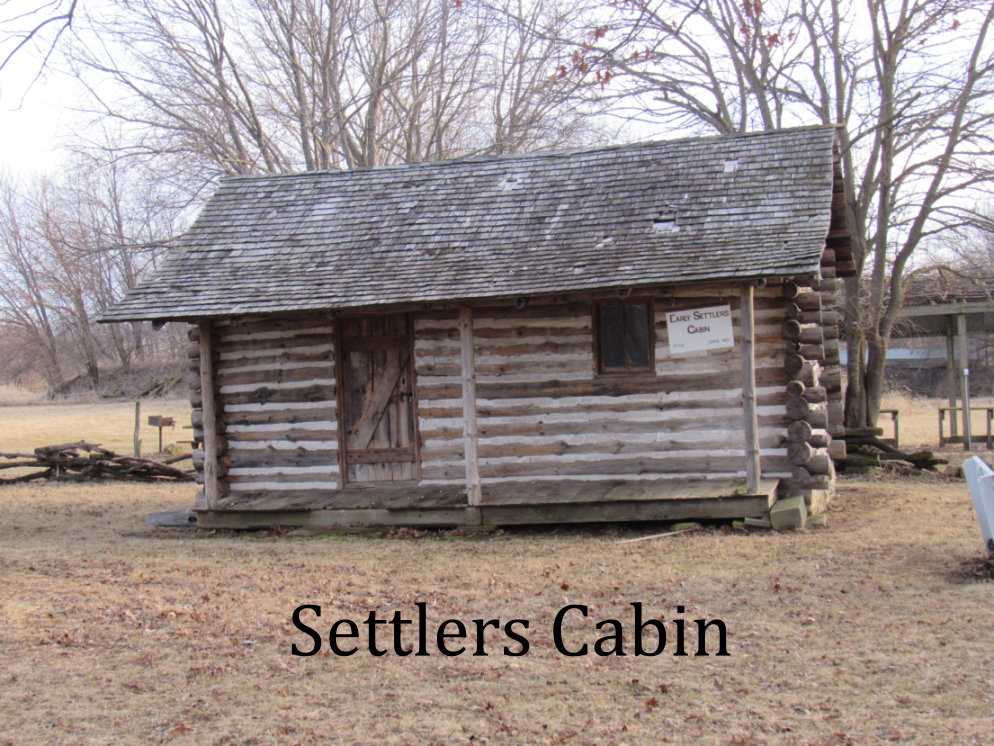
The Noe families were the first settlers. Jeptha (1806) and Lucinda (1812) Noe had two children, Benjamin (1832) two years old and Mary (1833) one year old. Along with them there was Cummins (1809) and Martha (18??) Noe, who had two children Mary (1831) three years old and Emory (1833) two years old. They left Jersey, Ohio in the fall of 1834 and came to Illinois. Cummins had a son Erastus born March 25, 1835 and then his two year old Emory died April, 6 1835 during their journey. Gently traveling, the family came north. The warm weather and infancy of the children made the iron spring water necessary and most gratifying. It was because of the iron spring that the Noe’s built a settler’s cabin being the first settlement (Helmershausen, (1935) “Souvenir of the Centennial”). This was located about one hundred yards northwest of the railroad crossing at Gap Road and Route 38.
The date of the first settlement has been determined by the following facts. The Noes were in Tazewell County, April 6, 1835. Colonel Whitney came north of the “Grove” in June, 1835 and found no settlement. The Noes came to Iron Spring then built a cabin. Jeptha Noe then went to Flagg Township and built another cabin. His son Benjamin W. Noe died August 7, 1835 according to his tombstone in the Flagg Center Cemetery. From these facts the date of settlement is set at July, 1835 (“Souvenir of the Centennial”(1935)Helmershausen).
A large number of pioneers came to this vicinity in the decade of 1830 to 1840. At that time, there were no railroads, telegraph wires, bridges, highways, or large cities. When traveling people had to go with an ox team over a mud road with a few rods of pike, privately made roads, in some places. There was no farm machinery and no markets to sell their agricultural goods at. A brief statistical look at the region would show that in 1839 there were only 2035 people in Lee County, today there are 33,400. In the 1830s there was about 150,000 people in Illinois, today there are 12,700,000. The population of the United States was 15,000,000, today there are 341,000,000. Chicago was a frontier fort in 1835 and now it’s the third largest city in the United States. There were only 338 miles of railroads, and they were mostly in the east. In 1860 the railroads had grown to 30,000 miles, 2/3 of which were in the northern states.
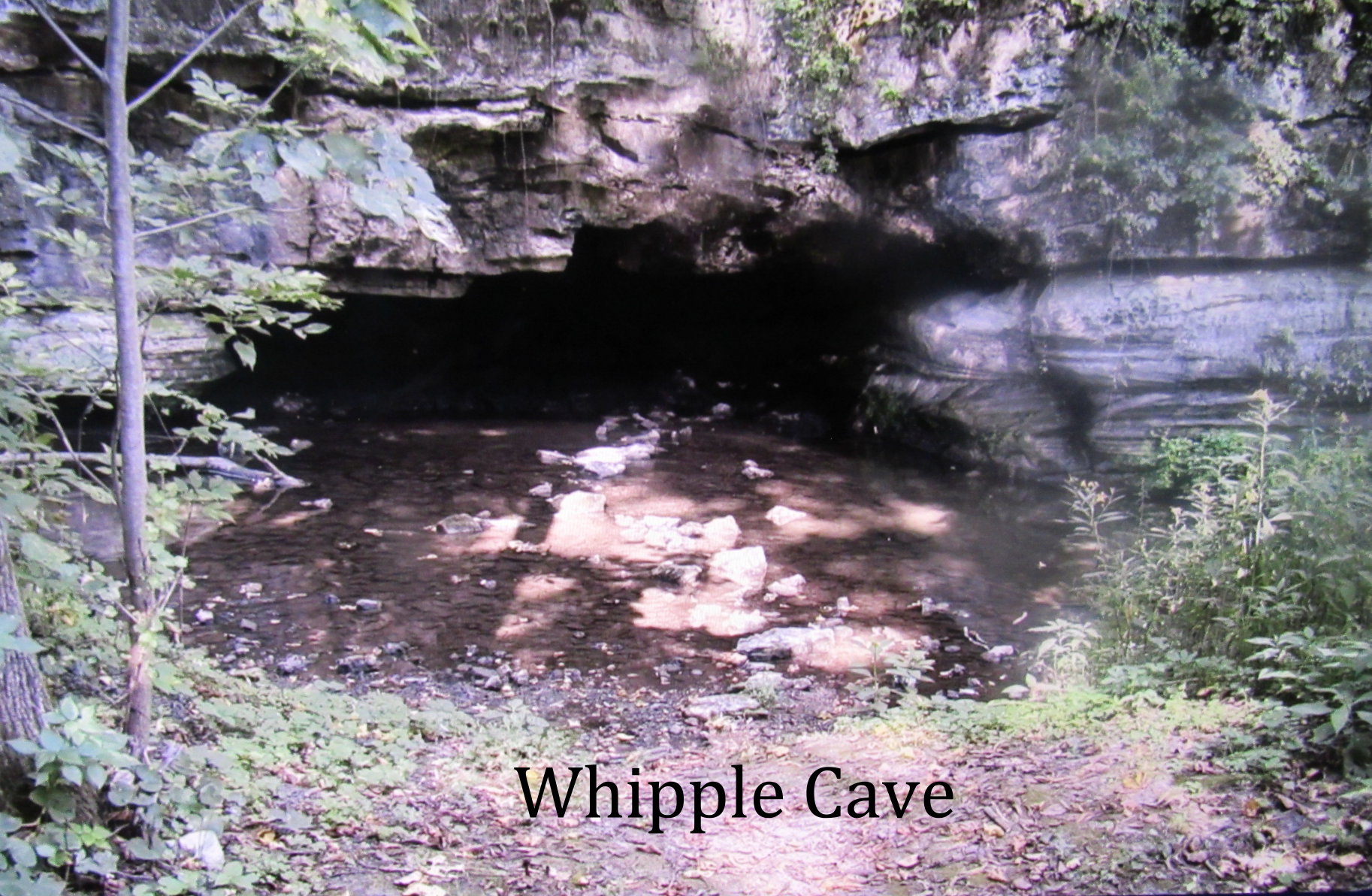
Land in the 1830s had neither been surveyed or offered for sale by the government. It was the practice of early settlers to mark off the amount of land they might think they once would require. This was held a sacred right, which must not be infringed upon or questioned. Squire Jeremiah Whipple, plowed for several days, surveying attractive land, embracing, probably as much as is now composed in a number of towns (Telegraph and Harold Book and Job Print(1870) Dixon). In 1836, Jeremiah Whipple settled near the cave, which is now in the Franklin Creek State Park. There he built a double log cabin, dam, and sawmill. He and his wife had four children. At that time the cave could be walked into and had three large rooms inside of it. Today it has filled in with silt to the point that only small animals can crawl back into it. Another man, David Holly, seeing the benefit to be derived from holding large tracks of land, started out with his oxen and plowed around what is now a number of townships, embracing portions of China (Franklin today) Township, Bradford, and Ogle.
These practices were known as squatter claims. Other ways of doing squatter claims was by building a house and fence around what land you could cultivate. The government did not sell land until 1845. When the government surveyed, they were required to bury a peck of charcoal at the corner of a section with a mound raise, and a numbered stake set in the charcoal. Each squatter was allowed to purchase the land he had previously claimed. Some of the land was sold for $1.25 per acre to the squatters which was really worth $10-$20 if a person refused to pay the government for the land that they had squatted on then someone else could buy it and they had to move (Telegraph and Harold Book and Job Print(1870) Dixon).
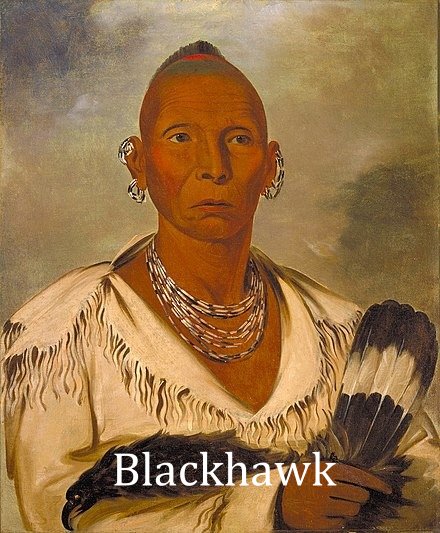
The land through Northern Illinois, bordering on the Rock River was the most fertile and valuable in the state, and was the last of a survey and offered for sale by the government owing probably to the disputed claim by the Sauk (Sac) Indians. This claim was not relinquished until 1838 when Black Hawk, the Sauk’s leader was routed, captured and transported beyond the Mississippi. One famous combatant against Black Hawks tribe was a young Captain, Abraham Lincoln. Blackhawk was a thin, stern looking man with a grand roach-cut (Mohawk style) crest of hair, bristling down the middle of his otherwise bald head. His ears were studded with trade silver rings and a large round metal, bearing the likeness of the British King, hung on his chest. He was a man of small physical stature, probably only 5 foot four or 5 inches tall and weighing only about 125 pounds and well passed his prime. He claimed he was 65 years old and yet he was the undisputed leader of the Sauk (Sac), even though he held no official position of authority within the Sauk (Sac) tribe. He was neither a chief nor a shaman. The source of his authority was mysterious. One of the earliest biographers indicated, “he was a remarkable example of an individual not at all gifted with any uncommon, physical, moral, or intellectual endowment; obtaining by external conditions the most extra ordinary celebrity.” Before the final 1838 battle in Prairie du Chien, Wisconsin, Black Hawk’s tribe, the Sauk (Sac), had claimed the geographical area of northwest Illinois as theirs. They called Saukenuk, at the confluence of the Rock River and Mississippi, the center of their world. Up to six thousand Sauk(Sac) people would meet there each year having their most important feasts and festivals (pg. 2-3 “Black Hawk” (2006) Trask).
As mentioned previously, one of the famous participants in the Black Hawk War was, Abraham Lincoln, our sixteenth President. Abraham Lincoln’s connection to Lee County, Illinois, centered on his service in the Black Hawk War, where he was stationed as a captain of the volunteer militia at Fort Dixon (modern-day Dixon). He was mustered into service at the Fort. In addition to his military service, Henry I. Lincoln, a distant cousin of Abraham Lincoln, owned the H.I. Lincoln stone building in Franklin Grove at the corner of Elm and Whitney streets.
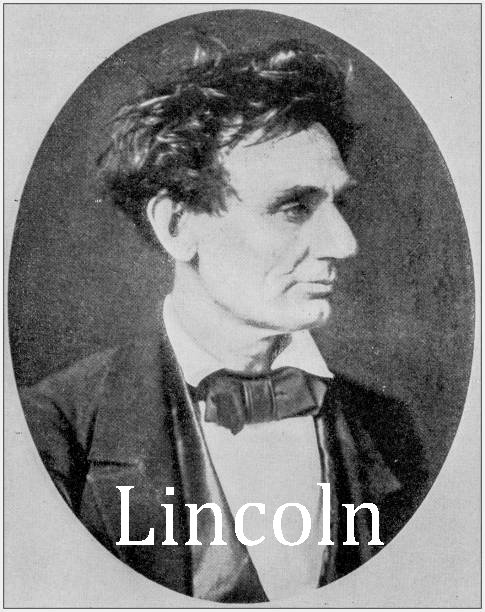
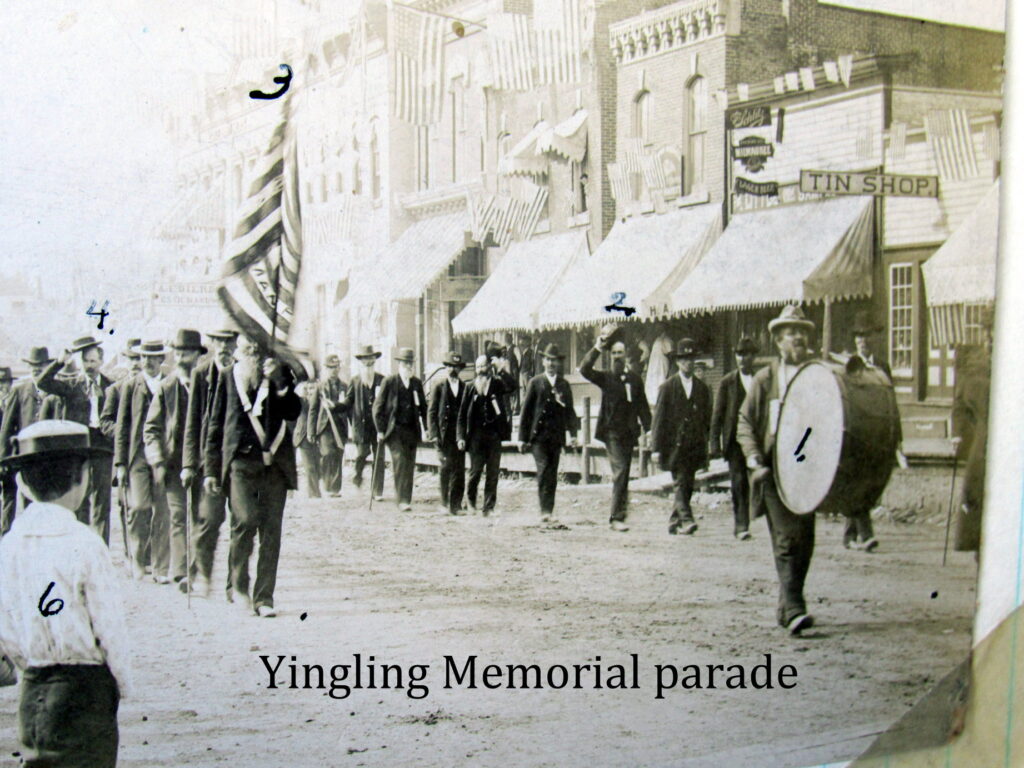
Franklin Grove’s past citizens had several interactions with Abraham Lincoln. Mr. Silas C. Yingling played drums in the president‘s band at Washington D.C. and saw Mr. Lincoln many times. Silas was a three year Civil War Veteran. He was a member of Franklin Grove’s American Legion, Altenberg Post, No.497. Silas was the driving force behind getting the Civil War era rifled Parrott cannon on display to this day in the center of the Franklin Grove cemetery. Silas’s grave is across the drive to the east of the cannon. Mrs. Hannah “Reigle” Yingling, Silas’s wife, was present November 19, 1863 when Abraham Lincoln made his famous Gettysburg speech and shook hands with him after the ceremony of dedication. Joseph Schnlibach was in Springfield and saw Mr. Lincoln several times. Mr. Charles Helmershausen Junior slept in a room next to the one assigned to Mr. and Mrs. Abraham Lincoln and heard him speaking through the thin walls, it was the time of the Douglas- Lincoln debates in Illinois. John Wesley Wingert was in Washington, D.C. at Ford’s Theatre when Lincoln was assassinated by John Wilkes Booth he heard the shot fired and also served as a guard at Lincoln’s coffin. Mrs. Adolphus Jones niece, Kate Leona Burchell met both Abraham Lincoln and Ulysses S. Grant. She talked about these two instances many times which were among her fondest memories. The first was when she was chosen as a table guest at a banquet given to Abraham Lincoln by her father. Watermelon was served, Abraham Lincoln took a large crescent of the melon, stepped outside and ate it by sifting the seeds out between his teeth to the ground. The second occasion was at a similar function given by Ulysses as Grant. Joseph Crawford of rural Dixon, the counties’s first surveyor, met Mr. Lincoln in Dixon and took him out to see his farm located on the corner of route 38 and Mt. Union Rd. east of Dixon. This is the only part of the Lincoln Highway, it is believed, that Lincoln ever traversed (“Souvenir of the Centennial”(1935)Helmershausen).
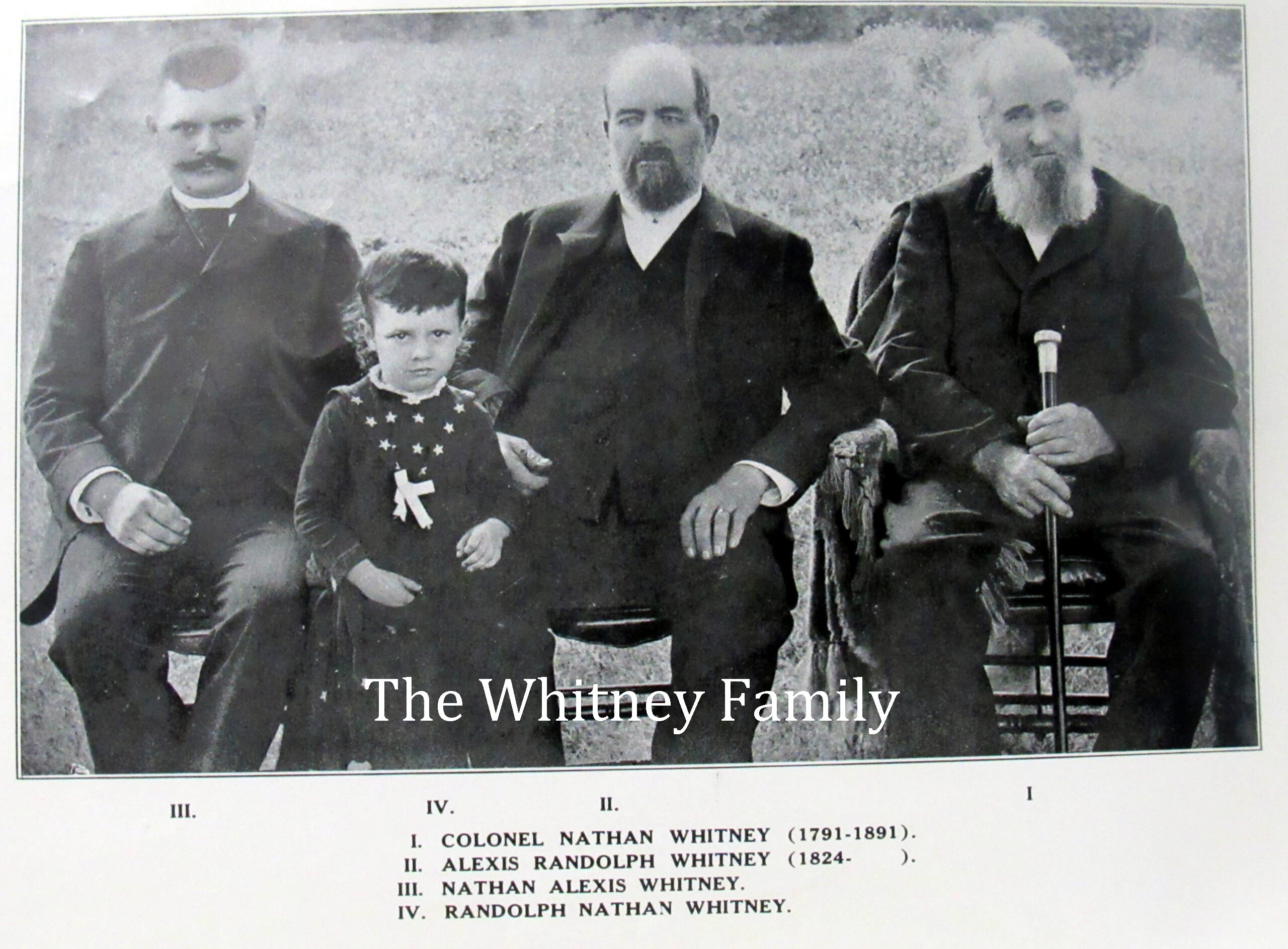
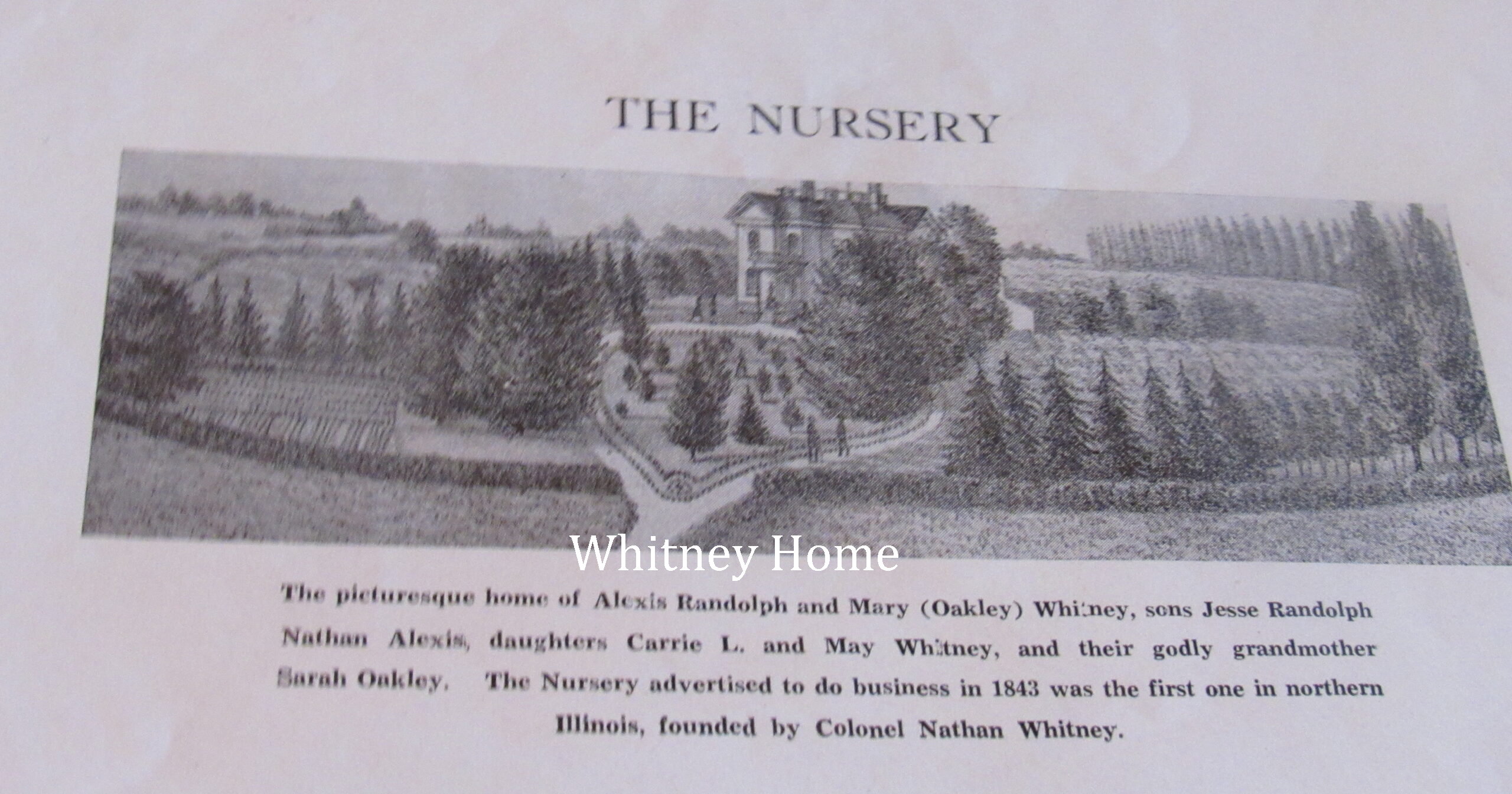
Colonel Nathan Whitney was one of the more notable early settlers of Franklin Grove. Nathan Whitney was born in Massachusetts in 1791. He moved with his parents to Ontario County, New York, where he spent his youth. Nathan Whitney was a veteran from the War of 1812. He was commissioned as a Captain, Lieutenant Colonel and a Colonel by Dewitt Clinton. He did brave service at Fort Erie.
Colonel Whitney came to the state in 1835 and in 1838 he built the first frame house upon this prairie in the county. It has been said that the framing wood was milled at Whipple’s saw mill powered by the creek at Whipple’s Cave; in todays Franklin Creek State Park. The Whitney estate had four houses constructed on it, the Italianate house from 1860 was the last one built and has its own Wikipedia entry and is on the National Register of Historic Places. The house is still standing and you can see the house today if you travel south on Whitney Road out of Franklin Grove; go over the tollway and look to the east. The house sits back in the field. It is a majestic two-story structure with a large cupola on top. The cupola was used by the Whitneys too watch their workers in the fields. When the orchard was in its prime it had a large structure to the north of the house. The building was two stories high with a large hand operated elevator to go from floor to floor. It had a third story built into the side of the hill like a basement. That was the shipping area. The “barn” was vandalized and burnt to the ground in the late 1900s. The Franklin Grove Area Historical Society salvaged the large pulleys and other parts of the elevator from the debris. It is their desire to put it on display when the funding becomes available.
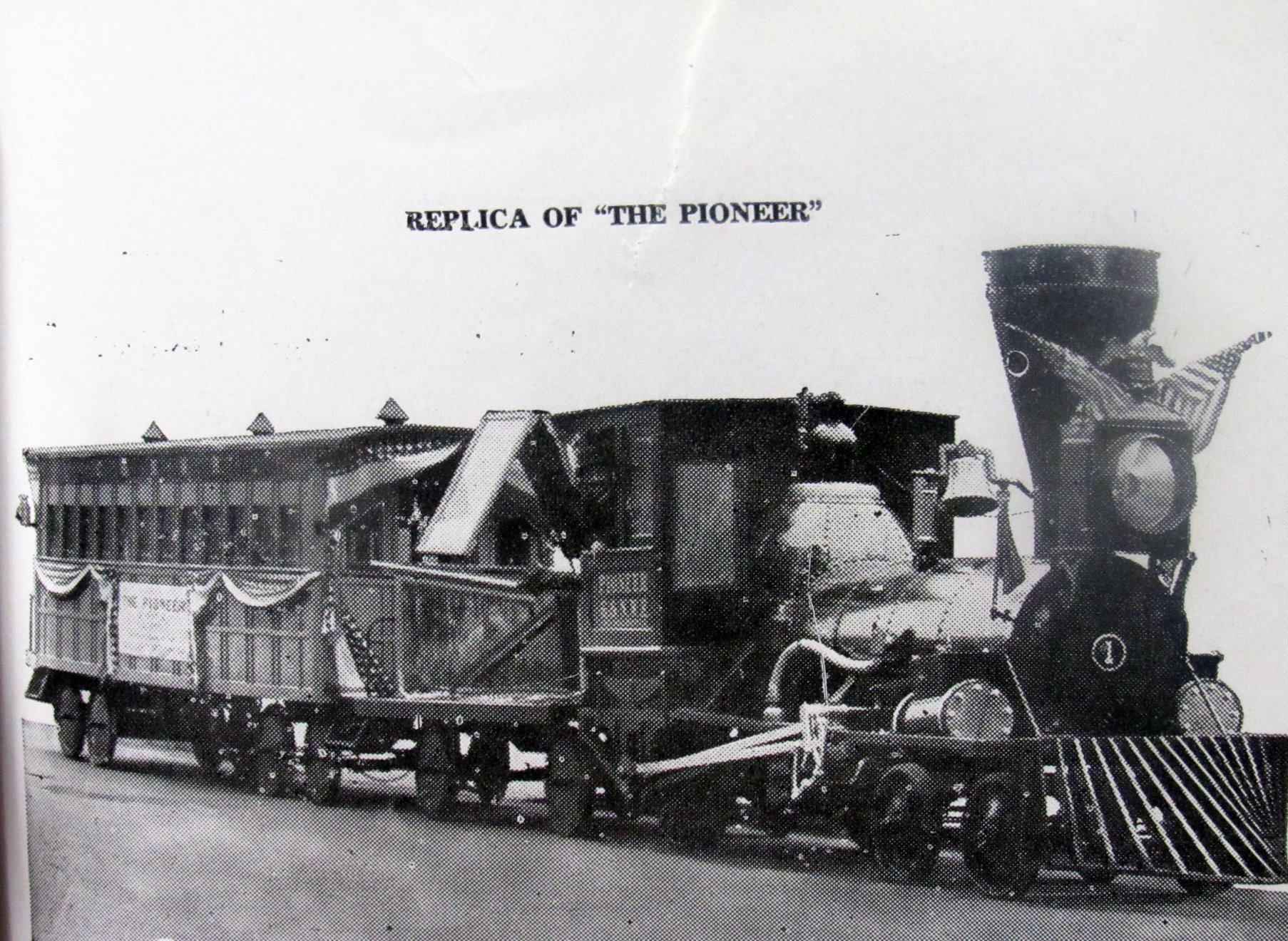
Colonel Whitney lived to be 100 years old (1791-1891). His orchards were later handled by Alexis Randolph, Whitney his son. Colonel Whitney was the commissioner of Franklin Grove when the county was formed in 1839. He was also a Mason of the Franklin Grove Lodge, Nachusa, Chapter Dixon Council, Dixon Commentary and Scottish, Rite (Telegraph and Harold Book and Job (1870) Dixon). The village of Chaplin was enlarged and given a new name of Franklin Grove. The Chicago and Northwestern Railway arrived at Franklin Grove, December 4, 1854 and for two years this village was the western terminal. “The Pioneer” was the name of the first locomotive engine that ran on any railroad west of Chicago. All engines built in those days were given names. It was built by the Baldwin Locomotive Works in Philadelphia, Pennsylvania. The engine had cylinders 10 inches in diameter and an 18 inch stroke. It had but one pair of driving wheels of four and a half feet in diameter and weighed 10 tons. When the engine was retired from service, it was given to the Field Museum in Chicago. “The Pioneer” was shown at the World Fair in Chicago in 1893 and in St. Louis in 1904. Being the railroads western terminal, the village prospered quickly(“Souvenir of the Centennial”(1935)Helmershausen).
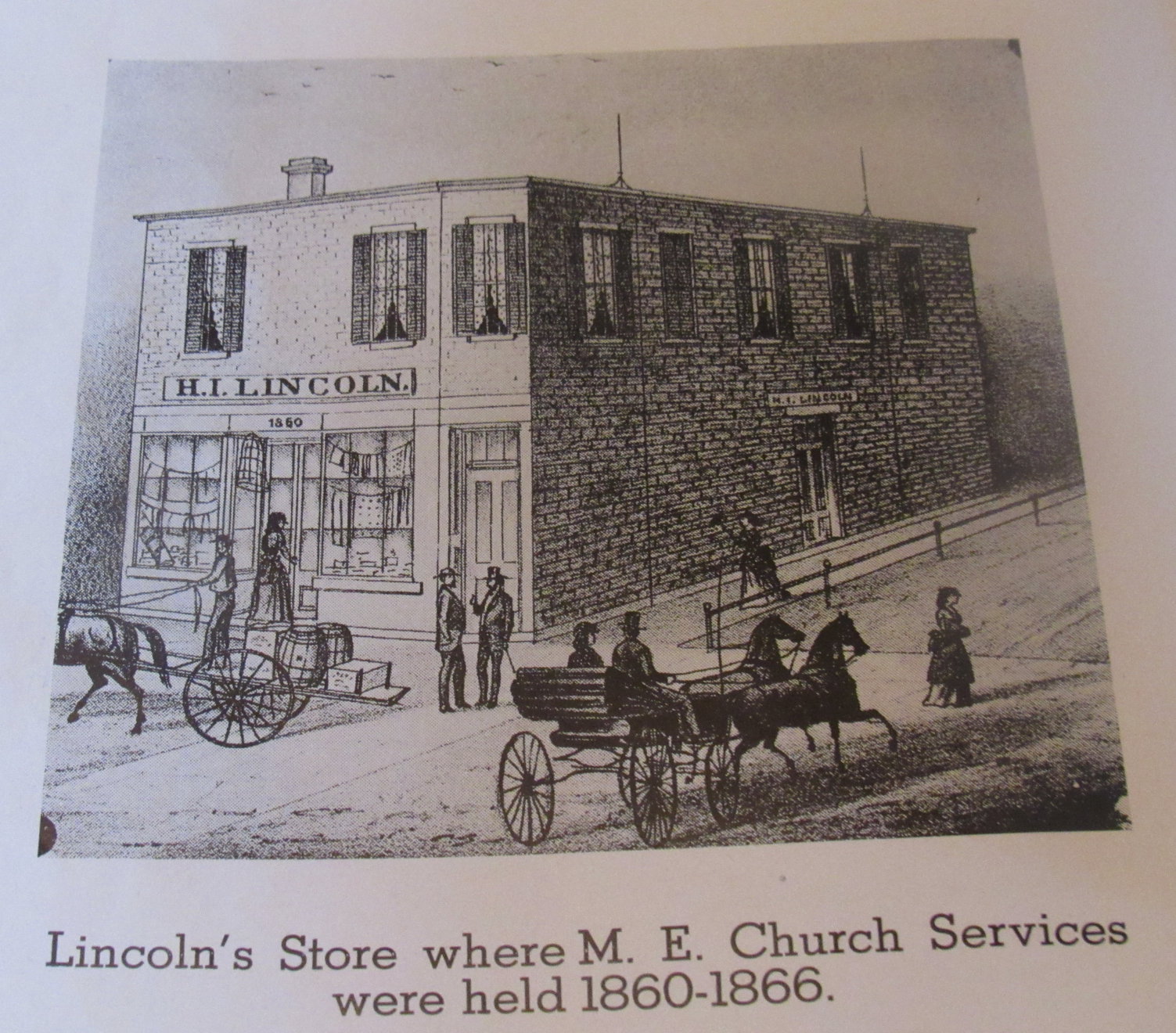
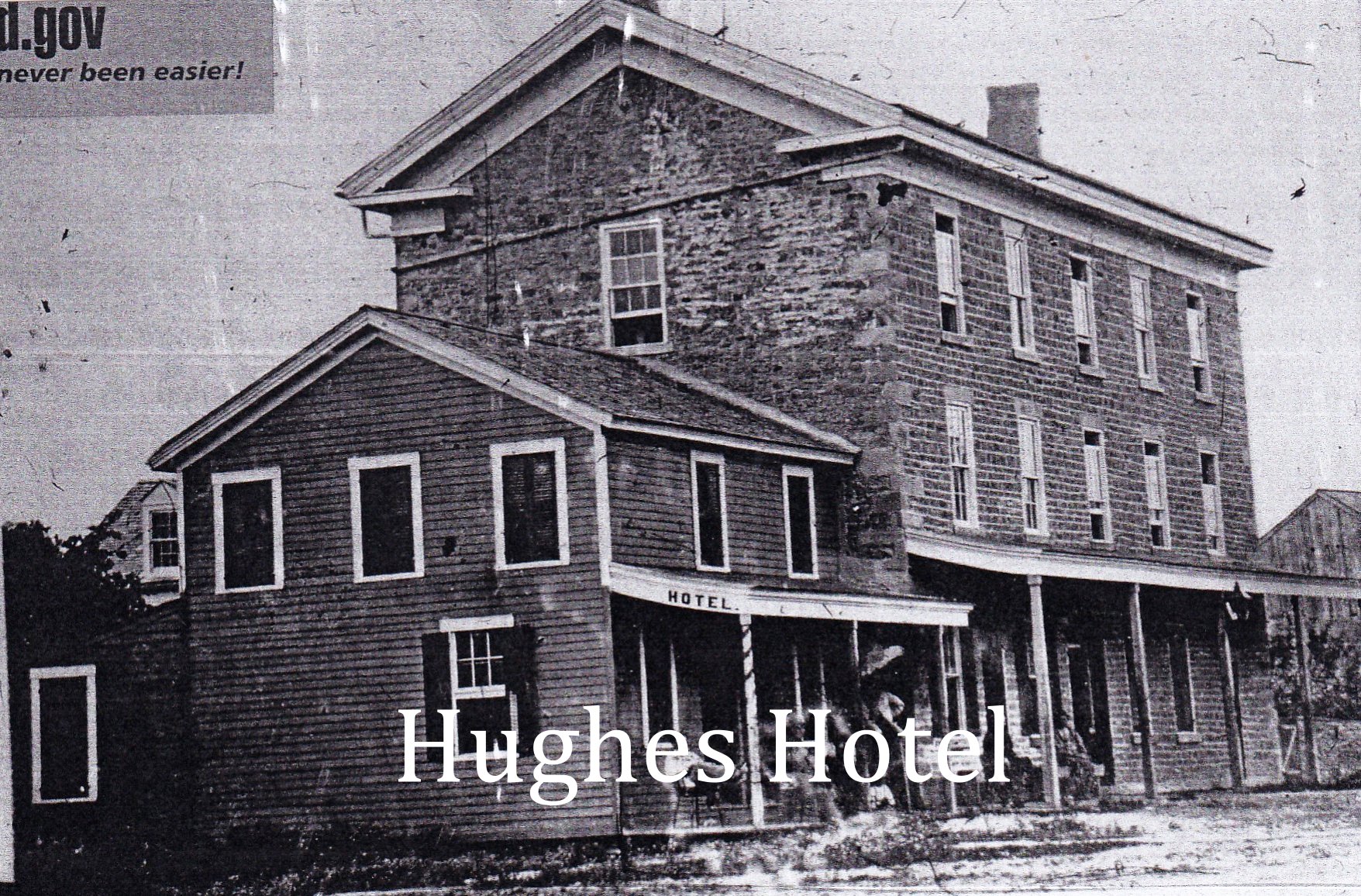
In early 1854 H.I. Lincoln purchased the first stone building which is still standing on the corner of Elm and Whitney streets next to the railroad. Another large stone building was the Hughes Hotel, built on the corner of Whitney and Walnut, where the present fire station is.
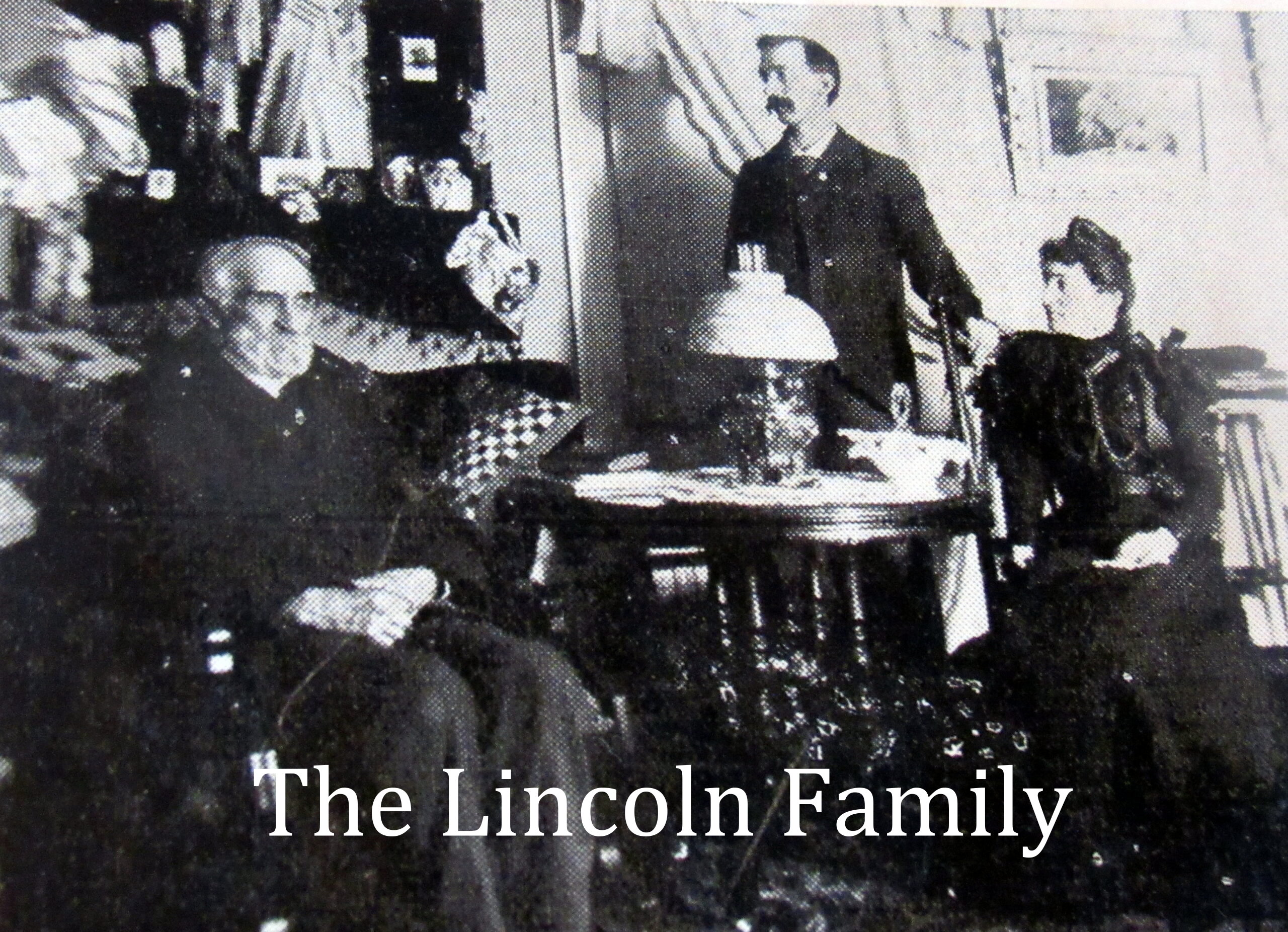
As the town grew, it became incorporated on May11, 1857. Louis M. Blaisdell, was the first President of the Franklin Grove Village Board.
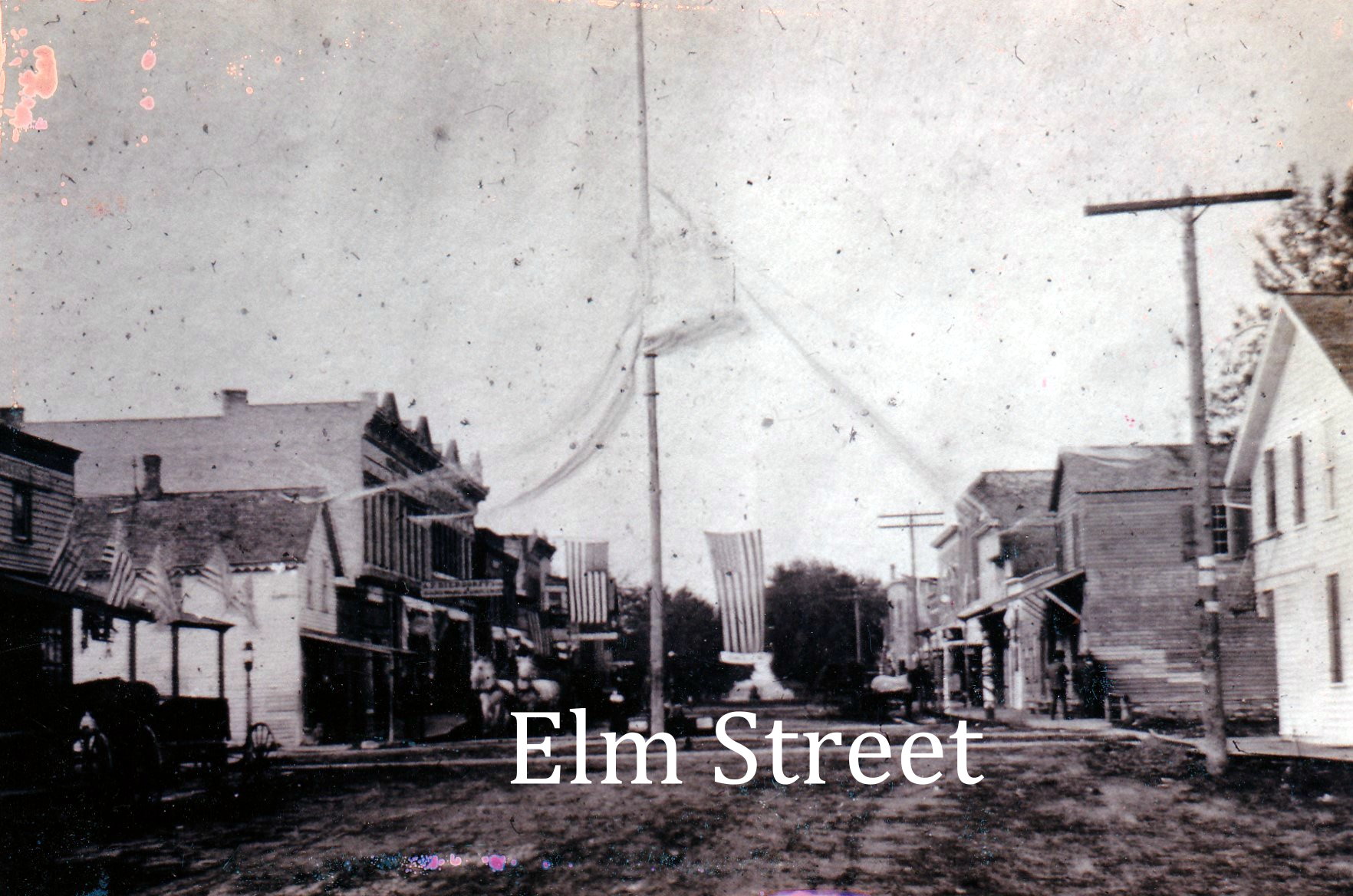
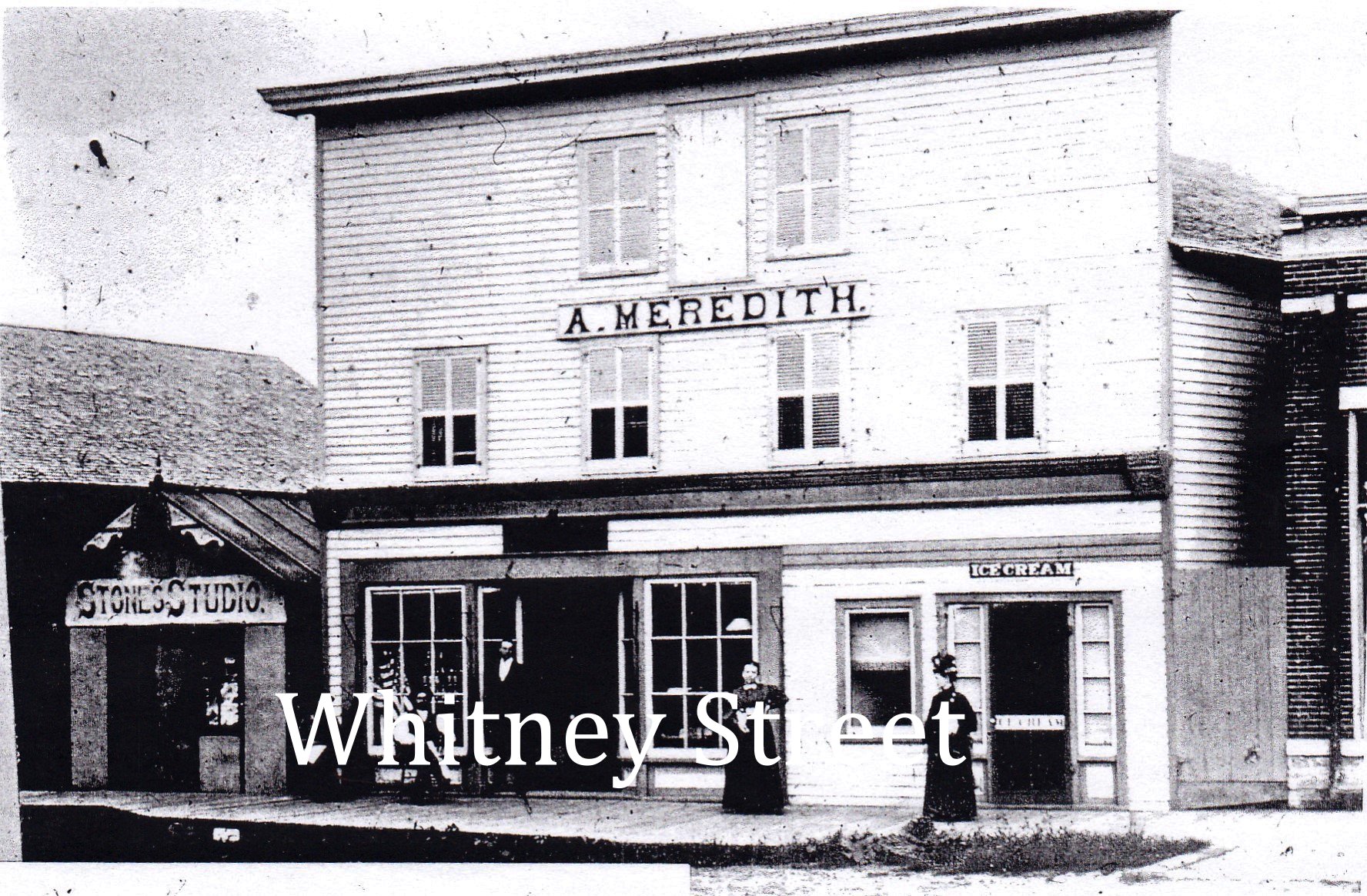
A list of known businesses from 1872 follows. It may not be complete but it will show how quickly the town prospered and how much variety it had. These businesses were, in most cases, located on Elm Street from South Street to the railroad and on Whitney Street from Elm Street to Walnut Street.
A. B. Fitch- railroad and express agent
J. L. Strock- architect and builder
Gabriel Miller and Company- dry goods
Wingert and Yale- dry goods
Rooney and Spickler- drugs, dry goods
George T. Weigel- druggist
Solomon Sunday- carriage and wagon maker
George H. Taylor- hardware and agricultural implements
George W. Hewitt- M.D. office in Weigel‘s drugstore
U.C. & N. C.Roe- manufactures of Roe’s Family Medicines
M. L. Gaver- harness maker
Joseph Graff- dealer in nets, blankets, combs, whips, etc.
Samuel Dysart- fine blooded stock
A. R. Whitney-Franklin Grove nursery
H. A. Black- postmaster and dealer in books, stationary, etc.
John Blocher- editor of Franklin Reporter Newspaper
J. A. Hanger- grain and lumber
Josiah Hughes- Hughes House Hotel
Isaac Twombly- capitalist
J. L. Frost- grain and lumber
C. E. Dietrich- merchant tailor
A. M. Williams- groceries, crockery, wooden wear
E. E. Faunce- flower and feed store
W. M. Mathe- groceries and provisions
J. D. Stewart- shaving and hairdressing
Conrad Durkee- note and loan broker
(“Souvenir of the Centennial”(1935)Helmershausen)
The town also had restaurants, ice cream parlors and a bar.
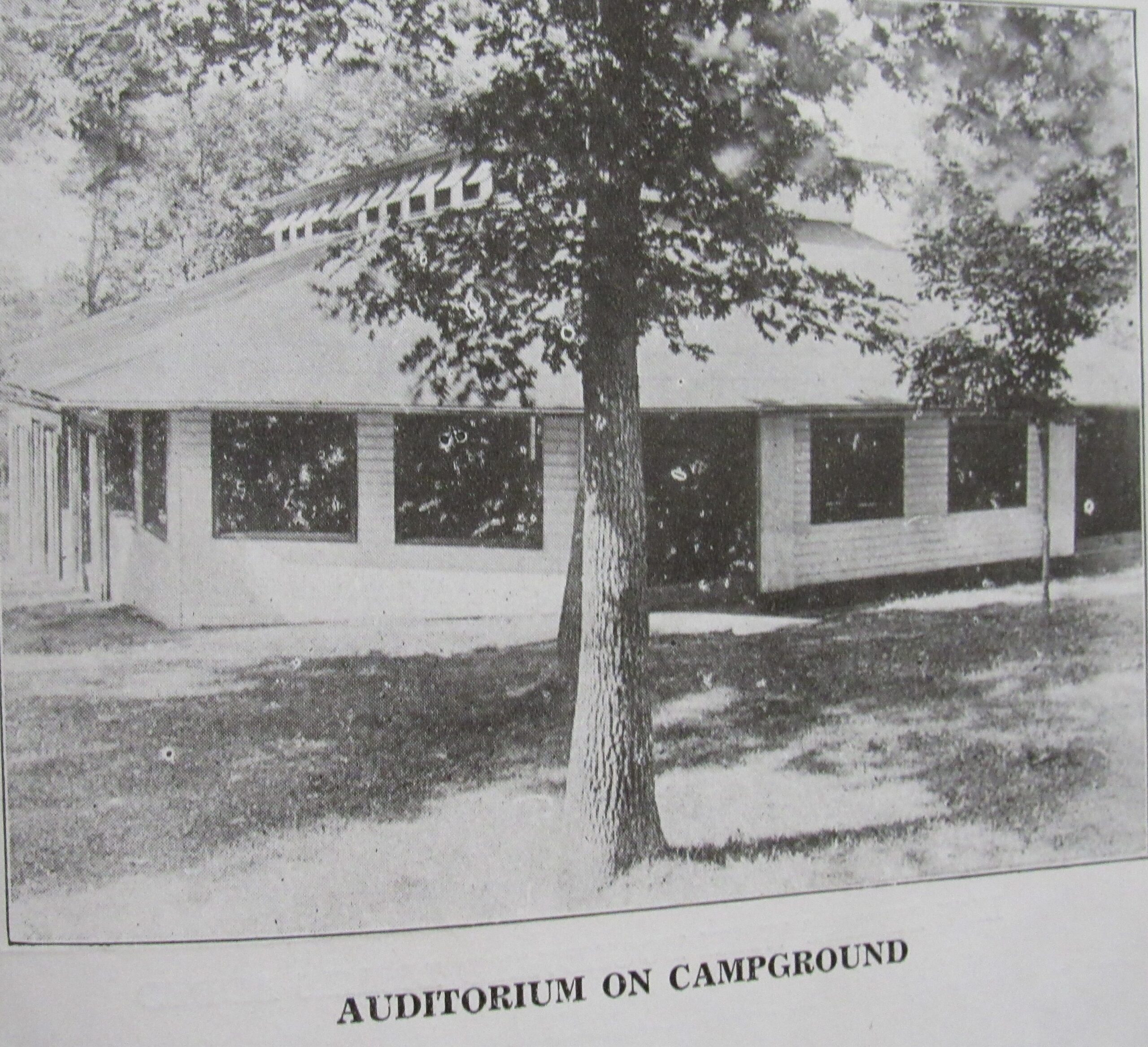
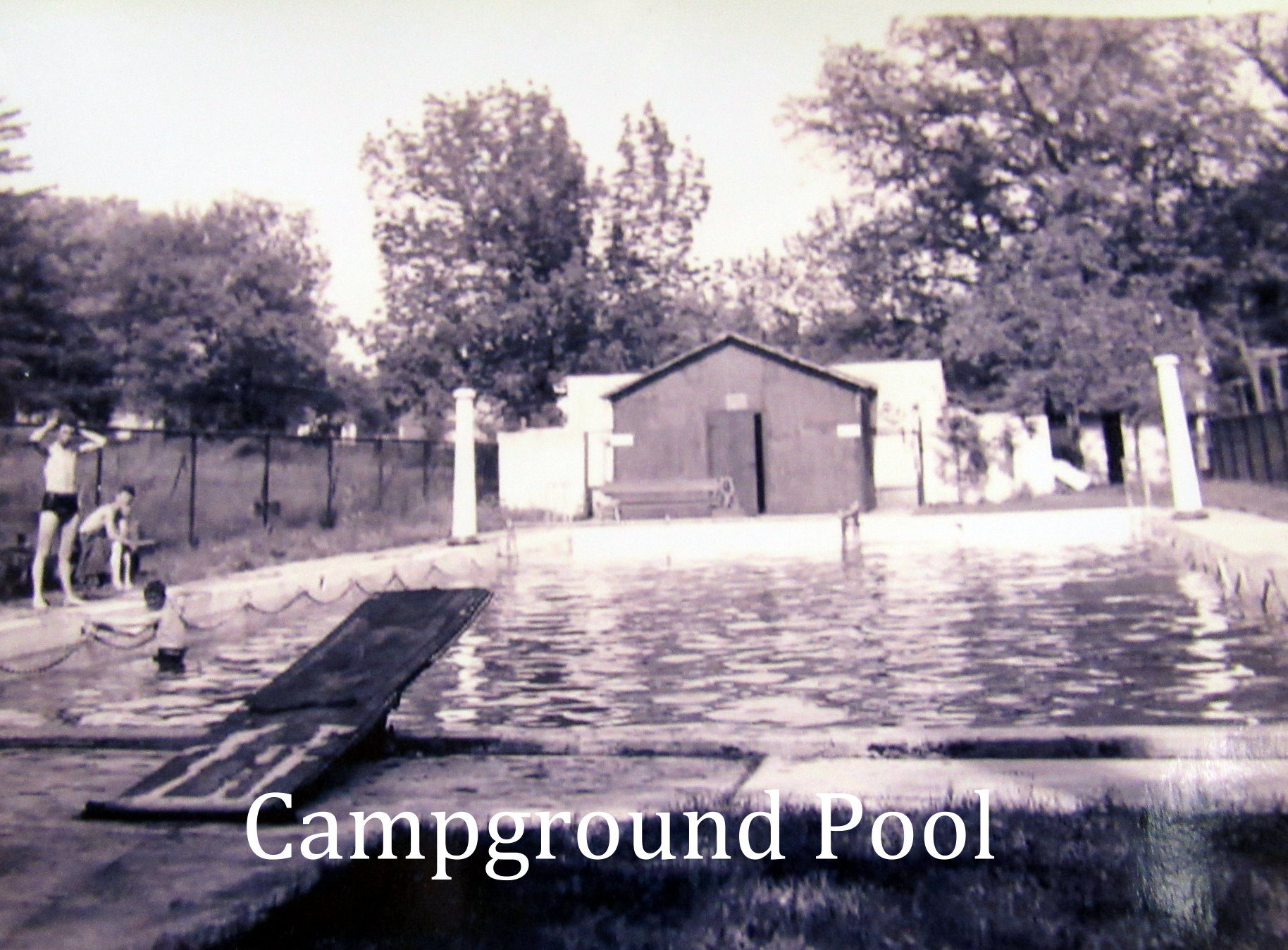
Along with all the businesses, Franklin Grove had four churches, the Presbyterian, Methodist, Lutheran, and Universalist. The Methodists were known for their “Camp-Meetings”. They were held in the “Camp-Grounds” located one block north of the railroad on State Street in the small valley west of the street. It is a large grove of trees south of the cemetery. In the past it was also used for village celebrations such as the one-hundredth anniversary of the Village in 1935, reunions and many other special events. The camp had a large auditorium, camp houses, and a swimming pool. In the late 1900s it went into disrepair and became a salvage yard. In resent years the property has been restored by the Franklin Creek Headwaters group.
The village also had societies such as the Masons. The upstairs of the 1868 Rooney building located on the Elm Street business district was originally built for use as a Mason Hall. Along with Franklin Grove’s Mason Lodge, number 264A. F. and A. M. and by Nathan Whitney Chapter, No. 129, R. A. M.. There was a prosperous lodge of Odd Fellows under the name of Franklin Grove Lodge, No. 409 I.O. of O.F.. Another society was the Good Templars Lodge which was a part of the temperance movement, they met on Saturday night (“Souvenir of the Centennial”(1935)Helmershausen).
This ends the telling of about the first eighty to one hundred years of Franklin Grove history. It is not everything but it hits many of the high points. You may have something of interest to submit to this essay. Please contact the village clerk and she will direct you to the appropriate person for submission.
If you want to research more about Franklin Grove and the area; the Winifred Knox Library has a full room of Franklin Grove information. If you have old pictures, documents, or other interesting items of the community from the 1800s to 1980 the library will make copies for their collection and give you the originals back. Please have a written explanation with the pictures or items, if you know what they are, if not we will take them anyway. Maybe someone else can give an explanation of the item.
Franklin Grove Area Historical Society
The Franklin Grove Area Historical Society was founded to establish, promote and maintain a society dedicated to the study and preservation of our area history. The Society’s function shall be collection, preservation, research, display and dissemination of any artifacts, documents or lands which illustrate and reflect the Franklin Grove area heritage. The society shall endeavor to make its possessions, property and materials readily accessible, with discretion, to those who wish to study or examine it.
MAJOR ACCOMPLISHMENTS
1980 – Sponsored the first Franklin Grove Area Summer Harvest Festival and continues to be the holder of the bylaws and finances of the Harvest Festival which is a sub committee of the F.G.A. Historical Society.
1981 – Members of the Historical Society along with others founded the Living History Antique Equipment Association.
1983 – Roger Taylor and Ray James founded the Hawk and Blade Muzzle Loaders Club.
1985 – Instrumental in organizing the first Franklin Grove All Class Reunion in 61 years. Placed a time vault in the Franklin Grove Library yard to mark the sesquicentennial of Franklin Grove.
1987 – Moved the last Blacksmith Shop in Lee County from Ashton to the future Chaplin Creek Historical Site. Blacksmith Shop donated by Glenn White.
1989 – Accepted donation of the Lindsay Saltbox House by Lois Calhoun and moved it to the site.
1990 – Accepted donation of the Yorty School from Hilda McIntosh and moved it to the site.
1991 – Officially named the “Chaplin Creek Historical Site”. Held the first Pioneer Day. Members, along with Lauren Kahn, founded the Chaplin Creek Muzzle Loaders.
1993 – Began construction of a log cabin in the Muzzle Loaders area of Chaplin Creek Historical Site.
1995 – 1996 – Completion of the downstairs in the Saltbox House.
1997 – Accepted donation of the “Smith and Hull” building from Dale and Adeline Jasper and moved it to the site.
1998 – Accepted donation of buildings from Ed Floto and Mary Lou Kidder and moved to the site.
Members of the Historical Society and other interested parties formed the Illinois Atlatl Asssociation. Unfortunatly disbanded due to lack of interest.
1999 – Accepted donations of 1855 barn from Jim Scott and summer kitchen from Robin Lahman.
2000 – Raised the “Scott Barn” during the Summer Harvest Festival. Laid out new roads and finished the outside of all buildings.
2001 – Landscaping Committee formed. Major tree planting effort launched.
2002 – Tree Plantings contine. Vinegar house from the Whitney property donated and relocated to site. Draft horse arena constructed in farm area. First annual Fourth of July Program initiated.
2003 – Permanent restrooms with modern fixtures constructed.
2004 – Gazeebo constructed by Jack Kelley, Max Baumgardner and others in memory of Jack H. and Vera Kelley. Wedding held at the site. Land debt retired.
2005 – 2019 Maintaining buildings and activities at the Chaplin Creek Site began to fall off. Founding members passed and no new membership was encouraged. The buildings fell into serious disrepair.
2020 – Covid!! No activities, no money, no repairs.
2021 – New leadership! Marilyn Spangler was chosen as President of the Society. New windows and installation for the school and cafe were donated. Some new members were added and some old members came back to work. Muzzle loading range closed due to safety and insurance concerns. Range building being repurposed as a wilderness viewing center.
2022-23 Repaired, painted, reroofed and guttered the Scott Barn. New roofing and gutters on the Kelly/Bartlett house, cafe, jail, school, and bathrooms.
2024 – New sidewalks at the cafe and jail. New steps on the Kelly/Bartlett house. Slab poured for a maintenance shed. The gazebo floor and steps were rebuilt. It had inappropriate rotten deck and it needed more joist put in. The whole structure was repainted. Painted the cafe and interior of the school.Repaired Julie’s kitchen so rain would not come in behind the facid. Ran underground electric passages to the Smith, newspaper, and maintenance buildings.
2025– New roof and windows for the cabin. New windows for the Kelly/Bartlett house, wilderness viewing building. Built an outdoor shower with constant flow heated water and dressing room for members, over night visitors, and re-enactor groups. The one car garage that was sitting in the weeds which at one time was connected to the cafe in town was moved to a new slab to be used as a maintenance building. Rebuilt with the help of WWII re-enactors. Food plots put in for the deer. The lower half of the woods was cleaned out for primitive camping or picnicking. Repaired the breaking foundation under the school and the rotted base sill. Ran a water line underground to Julie’s Kitchen.
The past 3-4 years of rebuilding has been accomplished with donations from very generous people who cared. There are not enough words that we can find to thank the individuals and companies that brought Chaplin Creek Village back from ruin. The job is not finished. It takes a lot to keep old wooden structures from failing.
Work progresses each year in all of the buildings – there’s always something new to see.
The Historical Society is seeking donations for several large projects. We want to build a chapel using the building setting on cement blocks and iron beams at the entrance of the site. We also need to finish the upstairs of the Kelly/Bartlett house. The hog-house behind the blacksmith shop is being renovated into a work-shop and storage. The print building needs to be rebuilt. The barn at the top of the hill needs to be salvaged and repurposed. The line-shaft work area needs to be installed in the blacksmith shop. The Scott barn needs to be arranged more for a museum style to show old farm items. Last but not least is painting, something always needs painting.
We are a 501c3 tax exempt organization. All donations are tax deductible and can be designated to a project. If you wish to donate labor we can accommodate that also.
We really need new members. No matter your age or condition we have something for you to do. The pay back is the pride of accomplishment.
We also have a list of membership benefits. For membership information:
Find us on Facebook: Chaplin Creek Village
www.franklingroveareahistoricalsociety.com
Lincoln Highway History
July 1, 1913 – Organized at Detroit, Michigan, with the objective: To procure the establishment of a continuous improved highway from the Atlantic to the Pacific, open to lawful traffic of all description, without toll charges, and to be a lasting memorial to Abraham Lincoln.
September 14, 1913 – Announcement of the route from Times Square in New York City to Lincoln Park in San Francisco, covering 3,389 miles, the first transcontinental highway.
September 1914 – First concrete “seedling” mile completed just west of Malta, Illinois.
May – September, 1915 – Moving picture made of the entire Lincoln Highway for showing the San Francisco Panama-Pacific Exposition.
July – September, 1919 – Lincoln Highway traversed east to west by an army truck convoy. This convoy was led by a young Lieutenant Colonel named Dwight D. Eisenhower
1922-1923 – Construction of the “Ideal Section” between Schereville and Dyer, Indiana — the model for future highway design.
1928 – Lincoln Highway marked coast-to-coast by concrete posts set by theBoy Scouts. The posts, which featured Lincoln medallions, contained directional arrows.
1935 – Publication of the story of the association’s great achievement in the book, THE LINCOLN HIGHWAY: The story of a Crusade That Made Transportation History. The association then dissolved.
October, 1992 – Association reactivated at a meeting in Ogden, Iowa.
1996 – Headquarters office established at: 111 South Elm Street, P.O. Box 308, Franklin Grove, IL 61031 Phone:815 456-3030. The office is on the Lincolnway.
1999 – Headdquarters office relocated to the H.I. Lincoln Building located at 136 North Elm Street in Franklin Grove.